UK Railway Rolling Stock & Track Sourcing: The pearlconrail.co.uk Supply Advantage
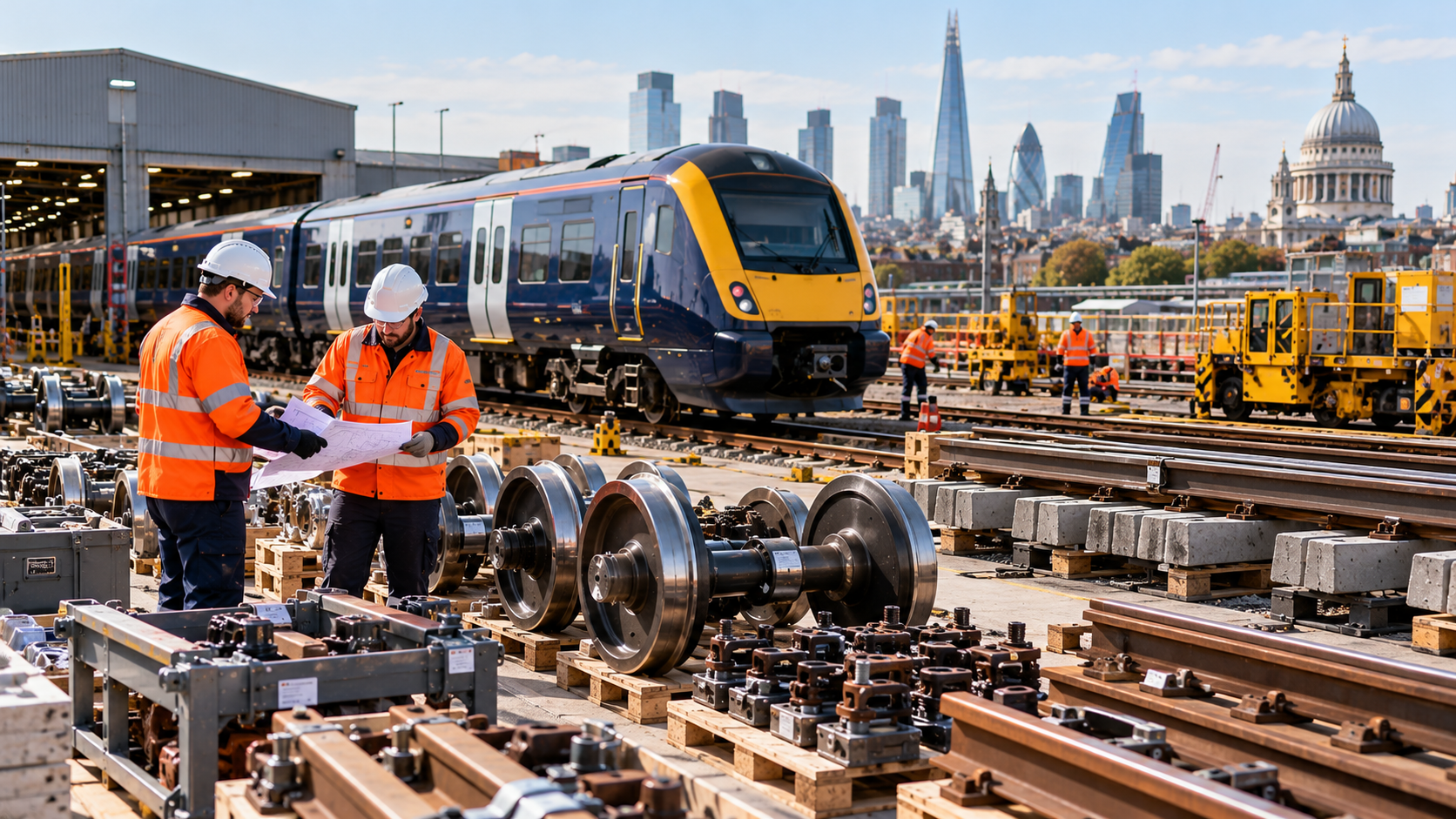
UK Railway Rolling Stock & Track Sourcing | Pearlcon Rail
Explore UK railway rolling stock, track components, MRO parts, signalling and procurement strategies to improve supply chain reliability across London, Hounslow, England and the United Kingdom.
UK Railway Rolling Stock & Track Sourcing
Railway rolling stock parts UK
Railway track components suppliers UK
Rolling stock MRO parts and components
Railway spare parts sourcing
Railway procurement services UK
Railway supply chain management
Rail infrastructure equipment sourcing
Railway engineering components
Train maintenance spare parts
Railway signalling and control equipment
Railway electrification and power supply
Railway procurement and logistics
Track materials and railway components
Railway equipment sourcing London
UK railway maintenance supply chain
Railway spare parts procurement England
London, Hounslow, West London, England, United Kingdom, UK railway industry, railway equipment sourcing London, Hounslow engineering and procurement, British railway supply chain, UK rail infrastructure procurement.
What is railway rolling stock?
What are rolling stock MRO parts?
What components are used in railway track systems?
Why is railway spare parts sourcing important?
How can railway operators improve procurement efficiency?
What should buyers check before sourcing railway components?
Railway rolling stock maintenance and track components for the UK railway supply chain.
UK Railway Rolling Stock & Track Sourcing: The Pearlcon Rail Supply Advantage
Introduction: Building a More Reliable Railway Supply Chain in the United Kingdom
The railway industry depends on the coordinated performance of rolling stock, track infrastructure, signalling systems, electrification equipment and maintenance services. Every component plays a role in supporting safe, reliable and efficient railway operations.
From passenger trains and freight locomotives to wheelsets, braking systems, track fasteners and electrical components, railway assets require suitable parts throughout their operational life. When a required component is unavailable, incorrectly specified or delivered late, maintenance activities can be delayed and asset availability may be affected.
This makes railway rolling stock and track sourcing in the United Kingdom an important consideration for railway operators, maintenance providers, infrastructure contractors, engineering businesses and procurement teams.
Railway procurement is more complex than purchasing standard industrial products. Components must meet the requirements of the intended application, fit the relevant equipment configuration and satisfy applicable quality, safety and technical requirements. Buyers must also consider documentation, traceability, supplier reliability and delivery schedules.
For organisations operating across London, Hounslow, West London, England and the wider United Kingdom, effective sourcing requires coordination between technical teams, procurement professionals, suppliers, logistics providers and maintenance planners.
The Pearlcon Rail supply advantage, as a topic, centres on the value of specialist sourcing, procurement coordination and access to railway equipment and spare parts. The company's published service descriptions include railway equipment sourcing, rolling stock maintenance, repair and overhaul (MRO) components, track materials, signalling, control, communication and electrification-related categories.
The wider lesson is that an effective railway supply chain should provide more than access to products. It should help buyers identify the correct components, manage procurement complexity, coordinate delivery and maintain visibility throughout the purchasing process.
Businesses looking to improve their broader operational processes and technology planning can also explore The Nexteck for its business and technology focus.
1. Understanding Railway Rolling Stock and Its Components
Rolling stock refers to railway vehicles that operate on a railway network. It includes passenger trains, freight wagons, locomotives, multiple-unit trains and other rail vehicles.
These vehicles contain mechanical, electrical, pneumatic, hydraulic and electronic systems that require inspection, maintenance and, when necessary, component replacement.
The specific requirements vary according to vehicle type, manufacturer, operating environment and maintenance programme.
Wheelsets, wheels and axle components
Wheelsets are essential to the interaction between railway vehicles and the track. They typically include wheels mounted on an axle, with associated components forming part of the wider assembly.
Maintenance and sourcing requirements may involve wheels, axles, bearings, axle boxes and related components, depending on the vehicle design.
Because wheelset components have direct implications for railway safety, purchasing teams must verify the exact specification, approved source, traceability and inspection documentation required for the application.
A component should never be selected solely because it appears physically similar to an existing part.
Braking systems
Braking equipment is fundamental to train control and safe operation. Depending on the vehicle and system design, relevant components may include brake discs, pads or blocks, valves, actuators, pneumatic components and associated assemblies.
Procurement teams should confirm compatibility with the specific vehicle configuration and the applicable maintenance requirements.
For safety-critical components, approval and documentation requirements should be established before an order is placed.
Suspension and mechanical assemblies
Suspension systems and associated mechanical assemblies contribute to vehicle stability, ride quality and the interaction between the vehicle and the track.
Replacement requirements may include springs, dampers, bushes, fasteners and other model-specific components.
Accurate identification helps reduce the risk of ordering incompatible parts and supports a more predictable maintenance process.
Electrical and electronic components
Modern rolling stock relies on electrical and electronic equipment for power distribution, lighting, passenger information, monitoring, control and diagnostics.
Depending on the application, sourcing requirements may include relays, connectors, power supplies, cables, control modules and other electrical assemblies.
Buyers should check the relevant electrical ratings, environmental requirements, product revision and compatibility with the installed system.
2. Rolling Stock MRO Parts: Supporting Maintenance and Availability
MRO stands for maintenance, repair and overhaul. In railway operations, MRO parts are used to inspect, maintain, repair and restore vehicles and associated equipment.
A reliable MRO procurement process helps maintenance teams obtain the components needed for scheduled servicing and approved repairs.
Planned maintenance requirements
Planned maintenance provides an opportunity to identify parts before they are required on the workshop floor.
Maintenance teams can review inspection findings, work orders, maintenance schedules and equipment history to estimate which components may need replacement.
Procurement teams can then verify specifications, check stock and arrange orders against the maintenance programme.
This reduces dependence on last-minute purchasing and gives teams more time to address long-lead components.
Unplanned repairs
Unexpected defects can create urgent demand for replacement components. In these situations, buyers need accurate equipment information and a clear understanding of delivery requirements.
A rapid response should not mean skipping technical verification. An incorrect component can introduce additional delays and potentially create safety or reliability concerns.
The appropriate process combines urgency with disciplined identification, supplier checks and approval.
Overhaul programmes
Major overhaul activities may require multiple components, specialist services and coordinated deliveries.
A well-prepared procurement plan should link each required part to the relevant vehicle, maintenance task, quantity and delivery date.
Where a project depends on several interrelated components, the team should identify which items are essential to completing the work and which can be obtained later without disrupting the approved schedule.
3. Railway Track Components and Infrastructure Materials
Track infrastructure supports the movement of railway vehicles and must be maintained to the required technical and safety standards.
Track sourcing can involve rails, sleepers, fasteners, clips, pads, joints, ballast-related materials and other components, depending on the project and track design.
The precise products required vary according to the infrastructure configuration, operating conditions and applicable engineering requirements.
Rails and rail-related materials
Rail components must meet the specification required for the relevant track application. Considerations can include rail profile, grade, dimensions, condition, compatibility and any applicable acceptance requirements.
Procurement teams should work from approved technical documentation rather than generic descriptions.
For replacement or renewal projects, accurate quantities and delivery planning are particularly important because the work may be scheduled around restricted access to the railway.
Sleepers and fastening systems
Sleepers support the rails and help maintain the required track geometry. Fastening systems secure the rail and provide the intended connection between the rail and its supporting structure.
These products must be compatible with the relevant track system. Different applications may require different materials, dimensions and fastening arrangements.
Using a component that is unsuitable for the installation can create rework and compromise the intended performance of the track system.
Track pads, clips and smaller components
Smaller components can have a significant impact on project readiness. A large infrastructure project may have the principal materials available but still experience delays because a relatively inexpensive fastening or connection component is missing.
This is why track procurement should account for complete bill-of-materials requirements, not simply the largest or most expensive items.
Delivery and site coordination
Rail infrastructure projects may involve restricted delivery windows, access arrangements, storage limitations and coordination with construction or maintenance teams.
Procurement planning should account for these constraints when confirming quantities, packaging, transport and delivery dates.
4. Railway Signalling, Control and Communication Equipment
Signalling and control systems support the safe and organised movement of trains. Communication systems also help railway personnel and operational systems exchange important information.
Sourcing components for these systems requires careful attention to compatibility, approved configurations and technical documentation.
Signalling components
Depending on the application, railway signalling equipment may include relays, control modules, cables, interface components and other system-specific parts.
The correct component must be identified against the installed equipment and the approved engineering requirements.
A generic substitute should not be assumed suitable simply because it has a similar electrical rating or physical appearance.
Communication and monitoring systems
Railway communication and monitoring equipment can support operational coordination, diagnostics and information exchange.
Procurement teams should confirm hardware revisions, interfaces, environmental suitability and any applicable system approval requirements before ordering replacements.
Managing changes to installed systems
A replacement component may involve a different hardware revision or an updated configuration.
Where changes affect an installed railway system, the responsible technical team must establish whether additional assessment, testing, configuration control or formal authorisation is required.
Railway safety and interoperability obligations should be considered throughout the procurement and installation process.
5. Railway Electrification and Power Supply Sourcing
Electrification systems supply power to railway operations where the relevant network uses electric traction. Railway power supply arrangements may include substations, distribution equipment, cables, connectors, protective devices and other specialist components.
The requirements vary significantly by system and infrastructure configuration.
Confirm technical and environmental requirements
Before sourcing electrification components, buyers should confirm the required voltage and current ratings, interfaces, environmental conditions, applicable standards and approved product specifications.
The supplier should provide the documentation required for technical review and acceptance.
Consider lifecycle requirements
A procurement decision should consider not only the purchase price but also the expected service life, maintenance requirements, compatibility and availability of future replacements.
For components that are difficult to source, buyers may need to review lead times and future availability as part of a broader asset-management plan.
Coordinate deliveries with engineering schedules
Power supply and electrification projects often require several interdependent components.
Delivery schedules should be aligned with installation plans, inspection requirements and the availability of appropriately qualified personnel.
Missing one critical item can delay a wider work package even when most of the required materials have arrived.
6. Why Railway Spare Parts Sourcing Can Become Complex
Railway procurement involves a combination of technical, commercial and logistical requirements.
A buyer may need a component for an older vehicle, a discontinued product, a specialist signalling installation or a track system with a specific configuration. The challenge is not simply locating a product listing; it is establishing whether the offered item is correct, suitable and available within the required timeframe.
Multiple suppliers and purchasing processes
When organisations source components from many suppliers, procurement teams may need to manage separate quotations, purchase orders, delivery updates and invoices.
This can increase administrative effort and make it harder to track the status of individual items.
A coordinated procurement approach can improve visibility and help teams focus on technical and operational priorities.
Obsolete and hard-to-source parts
Some railway assets remain in service for many years. Over time, manufacturers may discontinue products or introduce new revisions.
When an original part is no longer readily available, the buyer may need additional documentation, technical assessment or an approved alternative.
A supplier's claim that a replacement is compatible should be checked against the equipment requirements and the relevant approval process.
Uncertain delivery schedules
International sourcing may involve manufacturing lead times, transport arrangements, customs processing where applicable and receiving inspections.
Procurement teams should confirm which stages are included in the quoted delivery date and build reasonable contingency into the plan.
Documentation and traceability
Railway components may require supporting records to demonstrate product identity, quality or conformity with specified requirements.
The documentation needed depends on the component and its intended use. Buyers should define these requirements before purchase rather than discovering them when the shipment arrives.
7. The Value of a Structured Railway Procurement Process
A well-defined procurement process helps teams establish requirements, evaluate suppliers and track orders against operational needs.
The aim is to reduce uncertainty without adding unnecessary administrative complexity.
Step 1: Define the requirement
Record the equipment reference, part number, technical specification, quantity, required condition and intended application.
Where possible, include the relevant drawing, manufacturer reference or supporting documentation.
Step 2: Verify compatibility
Confirm that the product matches the installed equipment and intended use.
For safety-critical or regulated applications, identify the required approvals, traceability and acceptance criteria.
Step 3: Assess supplier capability
Evaluate the supplier's ability to identify the part, provide appropriate documentation and meet the required delivery schedule.
Where an authorised source is required, verify the relevant status.
Step 4: Compare total procurement value
Compare quotations using consistent specifications and commercial terms.
Consider price, delivery, packaging, warranty, documentation, product condition and any additional charges.
Step 5: Monitor the order
Track the purchase order, expected dispatch date, delivery progress and any unresolved technical questions.
Escalate delays early enough for the team to consider practical alternatives.
Step 6: Inspect and close the order
Check the received goods against the purchase order and the applicable receiving requirements.
Record any discrepancy and resolve it before the component is released for use.
For organisations seeking to improve the visibility of purchasing and internal workflows, The Nexteck offers a starting point for exploring business and technology planning.
8. How Logistics and Supply Chain Coordination Improve Delivery Reliability
Railway procurement does not end when a purchase order is issued. Components must move through the supply chain and arrive at the correct location in an acceptable condition.
Logistics planning is particularly important for large, heavy, fragile or time-sensitive railway components.
Delivery planning
The procurement team should confirm the delivery address, receiving contact, site access requirements and any restrictions that affect transport or unloading.
For infrastructure projects, the delivery date should align with the planned installation window and site readiness.
International sourcing
International supply arrangements may involve additional transportation stages, import documentation and customs procedures.
Buyers should understand the delivery terms, identify who is responsible for each stage and establish how delays will be communicated.
Quality checks during receipt
Incoming inspection helps verify that delivered products match the order and that required documentation is present.
The depth of inspection should reflect the component's risk, contractual requirements and applicable procedures.
One point of coordination
Where many orders are placed across multiple suppliers, a clear point of contact and consistent reporting can make it easier to identify overdue items and unresolved issues.
However, consolidated procurement should not remove the technical scrutiny required for specialist or safety-critical components.
9. Digital Procurement and Railway Supply Chain Visibility
Digital systems can help procurement teams monitor orders, supplier performance, inventory and delivery commitments.
The value comes from having accurate information available to the people who need it.
Purchase order tracking
A structured tracking process can show the order status, supplier confirmation, expected delivery date, outstanding documents and current issues.
This helps teams identify delays before they affect maintenance or project schedules.
Inventory and asset records
Accurate records help organisations understand which components are in stock, which are reserved for maintenance and which require replenishment.
Linking inventory records to the relevant asset or work order can improve planning and reduce duplicate purchasing.
Supplier performance reporting
Useful performance indicators can include:
On-time delivery rate.
Order accuracy.
Supplier response time.
Frequency of incomplete documentation.
Number of delivery-related maintenance delays.
Purchase order cycle time.
Inventory accuracy.
Frequency of urgent or emergency purchases.
Metrics should be defined consistently and interpreted in the context of component criticality and project requirements.
Technology should support the process
Automation can improve visibility, but it cannot compensate for inaccurate part numbers, unclear approval responsibilities or incomplete supplier information.
Organisations should standardise their procurement data and workflows before relying on automated reporting.
Businesses reviewing wider digital operations and business processes can visit The Nexteck to explore its technology and business focus.
10. Railway Procurement Across London, Hounslow and the United Kingdom
London and the wider South East are important commercial areas for many transport, engineering and infrastructure-related businesses. Hounslow and West London also form part of the broader regional business environment.
However, railway procurement requirements extend across the United Kingdom, and the location of a purchasing office does not necessarily indicate where a component will be installed.
A sourcing strategy should therefore consider the actual project location, delivery requirements, supplier capability and applicable technical standards.
London and Hounslow considerations
For organisations based in London, Hounslow or West London, effective procurement may involve coordinating suppliers, warehouses, engineering contractors and railway maintenance locations across different parts of England.
The key considerations are accurate product identification, dependable communication, appropriate documentation and realistic delivery planning.
UK-wide sourcing requirements
A railway project elsewhere in England, Scotland or Wales may require a different delivery arrangement from a project in London.
Procurement teams should confirm transport requirements, site access, storage and receiving procedures for each destination.
For international purchases, allow time for any applicable customs and import requirements.
Avoid choosing suppliers by location alone
A supplier's geographical proximity can be useful, but it does not prove that the supplier holds the required component or can meet a particular delivery date.
Evaluate suppliers on their ability to meet the documented technical, quality, commercial and logistical requirements.
11. Safety, Compliance and Quality Assurance in Railway Sourcing
Railway components operate within a safety-sensitive environment. The requirements for purchasing, inspecting, installing and maintaining equipment depend on the component, its application and the relevant railway system.
Technical compliance should be built into the procurement process from the beginning.
Verify the applicable requirements
Before purchasing, identify the relevant specifications, standards, approvals and documentation requirements.
The responsible engineering or assurance team should determine which requirements apply to the particular component and installation.
Maintain traceability
Where required, retain records linking the received component to its manufacturer, part number, batch or serial reference and supporting quality documentation.
Traceability helps with inspection, maintenance history and investigation if a problem occurs.
Control substitutions and changes
An alternative part or revised product may require technical evaluation and formal approval.
The purchasing team should not independently approve a substitution where engineering authorisation is required.
Inspect before use
Follow the applicable receiving, storage and acceptance procedures. Components should not be released for installation until required checks and approvals have been completed.
These practices help reduce the risk of unsuitable components entering the maintenance or construction process.
12. A Practical Railway Sourcing Readiness Checklist
Before committing to a railway component purchase, procurement and engineering teams can review the following checklist.
Confirm the equipment or track-system reference.
Verify the complete part number and technical specification.
Establish the required quantity and delivery date.
Confirm whether OEM sourcing or an approved alternative is required.
Identify the applicable technical approvals and documentation.
Review supplier capability and product traceability.
Compare quotations on a consistent commercial basis.
Confirm transportation, delivery and site-access arrangements.
Track the order against the required-on-site date.
Complete receiving inspection and document any discrepancies.
This checklist should be adapted to the specific product, project and applicable railway procedures.
13. Frequently Asked Questions (FAQs)
What is railway rolling stock?
Railway rolling stock includes vehicles that operate on a railway, such as passenger trains, locomotives, freight wagons and multiple-unit trains. These vehicles require appropriate maintenance and replacement components throughout their operational life.
What are rolling stock MRO parts?
MRO parts are components used for maintenance, repair and overhaul. Depending on the vehicle, they may include mechanical, braking, electrical, suspension and other equipment-specific parts.
What are railway track components?
Track components may include rails, sleepers, fasteners, clips, pads, joints and other materials used in a track system. The exact products depend on the approved design and intended application.
Why is railway spare parts sourcing important?
Reliable sourcing helps maintenance and infrastructure teams obtain suitable components when required. Better planning can reduce avoidable procurement delays and support maintenance readiness, although it cannot eliminate every supply chain disruption.
What should buyers check before ordering railway components?
Buyers should verify the part number, technical specification, equipment compatibility, supplier capability, delivery commitment, documentation and applicable approval requirements.
How can railway procurement delays be reduced?
Organisations can improve planning by identifying requirements early, verifying specifications, monitoring supplier lead times, maintaining accurate inventory records and escalating delivery issues promptly.
Why are traceability and documentation important?
They help establish product identity and provide evidence required for inspection, acceptance, maintenance records or other applicable processes. The precise documentation depends on the component and its intended use.
Does a local supplier always offer the best sourcing option?
No. Location can affect delivery, but buyers should also consider technical capability, product availability, quality, documentation, commercial terms and the supplier's ability to meet the required date.
Conclusion: Creating a More Dependable UK Railway Supply Chain
Railway rolling stock and track sourcing involves more than purchasing parts. It requires accurate technical identification, supplier evaluation, procurement coordination, logistics planning and quality assurance.
From wheelsets and braking components to track fasteners, signalling equipment and electrification materials, every purchase should be aligned with the needs of the relevant railway asset or project.
For businesses operating across London, Hounslow, West London, England and the United Kingdom, a structured sourcing process can improve visibility, help teams identify potential delays and support better maintenance and project planning.
The Pearlcon Rail supply advantage, as a procurement topic, highlights the potential value of specialist railway sourcing, supply chain coordination and access to a broad range of railway equipment categories. The right sourcing approach should always be supported by verified product information, appropriate supplier checks and the required technical approvals.
Technology and structured business processes can also help organisations improve procurement visibility and operational decision-making. To explore The Nexteck's business and technology focus, visit The Nexteck.
Disclaimer: This article provides general educational information and is not a supplier quotation, product certification or guarantee of availability. Always confirm the applicable railway standards, technical specifications, approvals and safety requirements before purchasing or installing railway components.